

Introduction
Across the constantly shifting landscape of online culture, few words have sparked as much curiosity as Zosqk.
It appears in captions, usernames, and art collectives, yet no one seems to know where it came from. The word looks modern—five sharp letters that feel coded rather than written. It slips through social feeds like a fragment of data, inviting people to ask: What exactly is Zosqk?
That question has become part of its power. In an age where language spreads at the speed of algorithms, mystery itself becomes a form of connection. From Seoul’s digital studios to creative hubs in Los Angeles, Zosqk represents a shared fascination with the unknown side of technology and culture.
What Is Zosqk?
Zosqk is a newly emerging cultural expression, a word born out of the internet’s endless experimentation with identity. It is not tied to any one language or nation. Instead, it behaves like a piece of open-source code—free to be adapted, reshaped, and reinterpreted by whoever encounters it.
Some hear in it the rhythm of futuristic branding. Others see it as a symbol of independence: a sound without ancestry, a concept without limits. To younger digital users, Zosqk feels like a badge of belonging to the borderless communities that exist online rather than in geography.
Because it has no dictionary definition, each person gives it their own. That flexibility is what keeps the term alive; it allows creativity to flourish around it rather than closing it inside a single meaning.
Origins and Early Appearances
Tracing the origin of Zosqk is like tracing a spark in a storm. The first scattered uses appeared on experimental forums near the end of 2025. Linguists studying machine-generated text noticed that the sequence z-o-s-q-k sometimes surfaced in auto-suggest algorithms—five letters chosen not for sense but for sound and symmetry.
Soon afterward, digital artists began using it as a project title, attracted by its abstract quality. On Korean micro-blogs, it was written phonetically as “조스큐크,” sometimes attached to minimalist images or electronic music. American users on design boards adopted it for similar reasons: it looked sleek, modern, and unclaimed.
Within months, Zosqk had migrated from code experiments into everyday conversation. Its journey from algorithm to slang shows how artificial creation and human imagination continually feed each other in modern communication.
Why Zosqk Captures Attention
Every era produces a word that feels perfectly tuned to its moment. Zosqk resonates because it expresses the intersection of mystery and technology. People are drawn to it for several emotional reasons:
- Novelty — It sounds unlike ordinary English or Korean vocabulary.
- Aesthetic appeal — Its structure looks symmetrical, almost logo-ready.
- Freedom of meaning — Anyone can claim it, redefine it, and make it theirs.
In digital culture, that combination is magnetic. It invites participation instead of explanation. Users remix it into memes, embed it in music videos, or simply tag it beneath abstract art. Each reuse expands its identity, giving the word a living ecosystem rather than a static definition.
Zosqk in Everyday Digital Life
For South Korean users, Zosqk has quietly entered the rhythm of social media language. It appears under mood boards, aesthetic edits, and conceptual photography posts—the way “mood,” “vibe,” or “aesthetic” functioned in earlier years. It conveys a sense of cool ambiguity: stylish but undefined.
In the United States, creators on visual-design platforms use Zosqk as a shorthand for the fusion of technology and creativity. You might see it captioning an AI-generated painting or a music producer’s new sample pack. The word’s neutrality makes it versatile: a signal for modernity without claiming any particular ideology.
Across both cultures, Zosqk has become a symbol of experimentation—a way to say, this is new, this is different, this is ours.
Linguistic Character and Aesthetic Shape
The appeal of Zosqk is partly phonetic. It begins with the uncommon “Z,” ends in the hard consonant “K,” and hides a rare “Q” in its center. Those sounds together produce tension and closure—like the electronic pulse of a synthesizer resolving into silence.
Designers notice the same energy visually. The tall lines of Z and K frame the circular O, creating balance on screen or print. That geometric harmony makes it ideal for logos, music-label emblems, and fashion tags. Its very look communicates modern precision.
Because of this harmony, Zosqk feels intentional. Even if it was born accidentally, it reads as designed—a perfect reflection of our era where randomness often becomes art.
Cultural Reflections
Zosqk’s rise mirrors broader cultural movements.
In South Korea, where digital expression often blends minimalism with emotional resonance, Zosqk resonates with a generation fluent in both languages of feeling and code. It carries the quiet rebellion found in indie design circles that challenge mainstream aesthetics.
In Western culture, the word symbolizes creative futurism. Writers and technologists see in it a metaphor for artificial intelligence—machines producing language that humans then transform into culture. Zosqk therefore becomes a meeting point: a shared linguistic space where East and West, human and algorithm, collaborate unconsciously.
Challenges of Definition
Trying to define Zosqk too tightly risks losing what makes it special. Its power lies in openness. Language scholars call such terms “floating signifiers.” They act like mirrors—reflecting the values of whoever uses them.
For one person, Zosqk might mean artistic freedom. For another, it might represent the coded heartbeat of the internet. Over time, those interpretations layer together, forming a collective meaning that no single author controls. That communal authorship is exactly what gives the modern web its vitality.
The Emotion Behind the Word
Beyond linguistics, Zosqk carries emotion. It evokes curiosity, anticipation, and a faint sense of nostalgia for the future—a feeling South Korean digital art often captures through soft neon tones and lo-fi textures. In this way, Zosqk is more mood than message. It expresses the excitement of standing on the edge of something new yet undefined.
Writers describe similar emotions in terms like saudade or han: words that hold complexity rather than clarity. Zosqk may become the contemporary version of that idea in digital form—the beautiful uncertainty of a generation creating its own vocabulary.
Looking Forward
Language evolves at the speed of connection. The next few years will likely see Zosqk continue expanding through art, marketing, and entertainment. Whether it becomes a brand, a philosophy, or simply a beloved internet word will depend on how people use it.
What is certain is that Zosqk has already achieved something rare: it has captured collective imagination without advertising, celebrity endorsement, or institutional support. It exists because communities keep breathing life into it. That organic energy is what defines the digital age.
Conclusion
Zosqk began as a fragment of data and has grown into a symbol of creativity, technology, and cultural fusion. Its meaning may never be fixed—and that is its greatest strength. By remaining open, it invites everyone to participate in shaping it. In doing so, it reflects the very nature of the internet: collaborative, unpredictable, endlessly inventive.
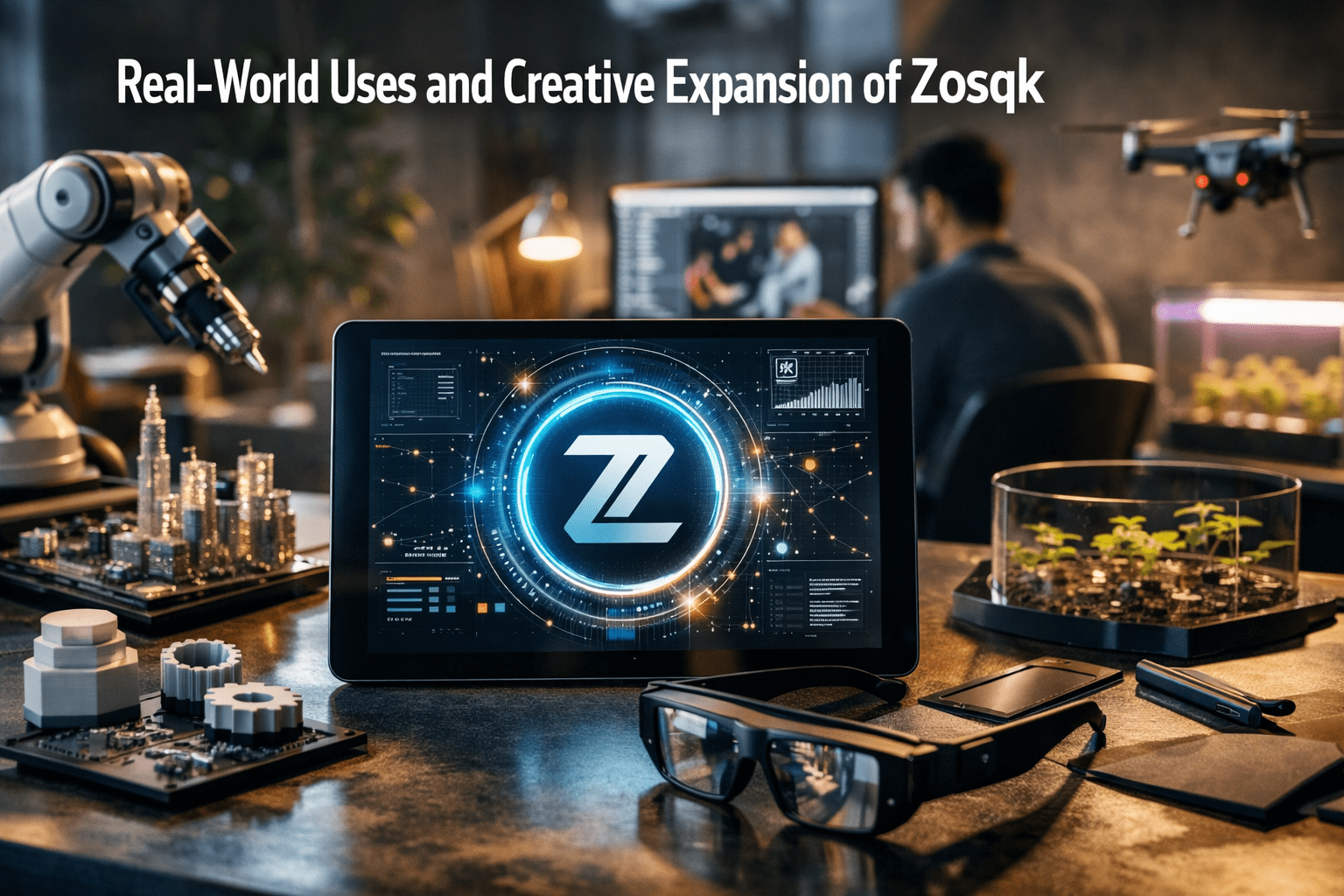
Real-World Uses and Creative Expansion of Zosqk
Zosqk in Art and Design
Artists were among the first to sense the poetic potential of Zosqk. Its sharp, mechanical letters and open meaning made it perfect for visual experimentation. Graphic designers began using it as a placeholder word, like “Lorem Ipsum” for the algorithmic era, but soon realized it carried its own atmosphere.
In digital galleries across Seoul, Zosqk appears on neon posters, kinetic-type installations, and NFT animations that pulse with metallic gradients. It suggests future minimalism—clean, balanced, and mysterious. Western artists picked up the cue: exhibitions in Los Angeles and Berlin have used Project Zosqk as a title for collections exploring the intersection of data and emotion.
For both cultures, the word has become shorthand for beauty created from code—art that feels engineered yet deeply human.
Zosqk in Music and Sound Culture
Musicians often chase words that sound like rhythm. Zosqk, with its clipped consonants and low vowel, behaves like a beat: Zos-qk, two percussive hits that echo digital percussion.
In South Korea’s electronic scene, independent producers tag tracks with #Zosqk when exploring hybrid genres that blend synthetic tone with traditional instruments. The name now appears in playlists that mix lo-fi, ambient, and techno, signaling a shared futuristic aesthetic.
American producers have used it as a stage or album name; its neutrality lets listeners project their own feelings onto the sound. In both markets, the term has quietly evolved into a sonic signature—a small signal that the artist belongs to a community pushing boundaries.
Fashion and Lifestyle Interpretation
Fashion often translates language into form, and Zosqk has started appearing on streetwear and concept collections. A few Seoul-based labels print the word in fragmented typography across oversized shirts or minimalist sneakers. To them, Zosqk embodies digital rebellion—style born from the screen rather than the runway.
In New York and Los Angeles, boutique designers use it for capsule lines that merge technology with sustainability: reflective fabrics, modular accessories, garments encoded with NFC tags that link to art files. The word becomes an emblem of connected individuality, expressing how people now live simultaneously in physical and virtual worlds.
Communication and Online Identity
Language online moves faster than any dictionary can keep up with. Zosqk is a perfect example of a term functioning as both a word and an identity token. Some social-media users add it to their handles or bios, using it the way older generations used nicknames—except now the meaning is intentionally undefined.
For teenagers and young adults, writing “zosqk” in a comment or caption signals membership in a small but growing digital tribe. It communicates, I understand the culture of the future. Among Korean micro-influencers, the tag has even become a subtle aesthetic label comparable to “minimal,” “vapor,” or “meta.”
Because it means many things at once, it allows self-expression without limitation—something every generation seeks but rarely finds.
Literary and Philosophical Usage
Writers have begun to treat Zosqk as a metaphor for language itself. Essays in creative-writing forums describe it as “the silence between two signals,” a representation of how meaning arises from emptiness. Poets use it to stand for the undefinable moment between thought and expression.
In Korean short fiction, Zosqk occasionally appears as a character name or imaginary city—an ambiguous place where the digital and the spiritual overlap. English-language authors interpret it as a feeling of anticipation, the sense that something extraordinary is about to emerge.
These artistic uses show how Zosqk has already outgrown its random beginnings to become a symbol of the human search for sense inside information noise.
Collaboration Between Cultures
Few linguistic inventions travel easily between East and West, yet Zosqk has done so almost effortlessly. Korean creators emphasize mood and subtle beauty; American and European artists focus on abstraction and technology. The meeting point lies in Zosqk’s neutrality—it carries no cultural baggage, allowing collaboration without translation hurdles.
Joint projects have begun appearing: Korean visual artists partnering with U.S. digital-sound designers under the shared theme of The Zosqk Experiment. These collaborations highlight a new global language of art driven not by national style but by shared digital curiosity.
Educational and Research Contexts
Universities studying semiotics and media theory have started referencing Zosqk as an example of emergent meaning—how communities create vocabulary from randomness. Workshops in Seoul National University’s communication department and U.S. design programs alike analyze its rise as evidence of participatory linguistics.
For students, the word demonstrates that the boundaries between algorithmic suggestion and human creativity are dissolving. Zosqk shows that even a meaningless string can acquire depth once people begin to use it sincerely.
Everyday Speech and Humor
Beyond academia and art, Zosqk is slipping into ordinary conversation online. People use it playfully:
- “That movie was so zosqk” = unexpectedly good or strange.
- “Feeling zosqk today” = energized yet contemplative.
It works because its vagueness makes it safe. Like a friendly inside joke, it unites communities without excluding anyone. South Korean commenters sprinkle it into chat threads the way English speakers use “lol” or “vibe.” The humor lies in pretending everyone already knows what it means.
Symbolism in Visual Media
Film and advertising have begun experimenting with the term as a visual motif. Short films screened at Busan and Jeonju festivals feature title cards reading “Zosqk” to evoke a speculative future. In global marketing campaigns, stylized versions of the word appear on holographic packaging or digital-fashion previews, emphasizing innovation and curiosity.
The recurring theme is that Zosqk equals possibility—whatever comes next in culture, design, or imagination.
Economic and Social Influence of Zosqk (2026–2030)

Zosqk as a Cultural Commodity
Even though Zosqk started as an abstract term, it has gradually entered the world of commerce. Artists, designers, and small business owners in South Korea have realized that the word carries a sense of modernity and curiosity.
Boutique brands print Zosqk on clothing, stationery, and digital products, giving the items a conceptual edge. In the U.S., startups have explored using Zosqk as a brand for tech accessories, mobile apps, or experimental design services. Its neutrality allows it to function across cultures, making it both marketable and globally flexible.
What’s remarkable is that no company owns Zosqk, yet it has a commercial identity: a free-floating cultural commodity that gains value through community recognition. People buy or engage with Zosqk-labeled products not because they are mainstream, but because they signal creativity and exclusivity.
Zosqk in Entertainment and Media
The entertainment sector has also begun experimenting with Zosqk. Independent filmmakers and content creators use the term in storylines, project titles, or fictional brands within movies. For example, a Korean short film used Zosqk as the name of a digital city—a futuristic, almost dystopian environment where technology and emotion intersect.
Music producers similarly release tracks under the title Zosqk, emphasizing electronic textures or experimental genres. American digital studios have adopted the term for AI-related creative workshops, positioning it as a symbol of innovation and boundary-pushing artistry.
By appearing in multiple forms of media, Zosqk transitions from a mere word into a shared cultural reference, one that binds different creative communities together without forcing uniformity.
Influence on Online Communities
Online communities play a critical role in Zosqk’s evolution. On South Korean platforms like Naver Cafe, DC Inside, and KakaoStory, users employ the word in playful, experimental ways—commenting “오늘 기분이 zosqk야” (“Feeling zosqk today”) to capture moods that are hard to describe in conventional terms.
In Western communities—Reddit, Discord, and creative Slack channels—Zosqk acts as a marker for digital identity. People use it in usernames, avatars, and project titles to convey a sense of membership in forward-thinking, tech-savvy groups.
This community-driven usage is what makes Zosqk resilient. Unlike fleeting trends, words that communities adopt for self-expression build cultural stickiness, increasing their longevity in digital consciousness.
Economic Significance and Market Potential
From a business perspective, Zosqk represents untapped commercial potential. Because it is culturally neutral yet aesthetically distinctive, it can be adapted into a wide array of industries:
- Fashion: Streetwear, conceptual clothing, and limited-edition accessories.
- Technology: Software tools, apps, and AI-assisted design platforms.
- Creative Services: Graphic design, video production, and digital marketing labels.
- Entertainment: Music albums, art installations, and virtual experiences.
In all these contexts, Zosqk acts as a signal of innovation, allowing brands to communicate uniqueness without overt explanation. Its flexibility also makes it attractive for cross-border commerce, appealing to both Korean and American consumers simultaneously.
Zosqk and Identity Formation
Beyond commerce, Zosqk plays a role in shaping digital identities. Just as hashtags like #aesthetic or #vibe once allowed individuals to express belonging to a culture, Zosqk provides a more abstract, flexible identity marker.
For South Korean youth engaged in online subcultures, the word conveys aesthetic awareness and creative literacy. In the U.S., early adopters use it to signal experimentation and openness to digital innovation. Its lack of fixed meaning is its strength: the word can adapt to each user’s intention, creating a shared yet personal symbol.
Symbolic Significance
Zosqk embodies the modern digital condition: fluid, collaborative, and participatory. Unlike traditional words tied to objects or ideas, it grows in meaning only through collective use. Every time someone tags a photo, titles a song, or incorporates it into art, the word accrues subtle layers of significance.
In this way, Zosqk is not just a word—it’s a living cultural artifact. It demonstrates how humans navigate and interpret the digital environment, turning randomness into meaning and connection.
Predicting Zosqk’s Cultural Trajectory
Looking ahead to 2030, several patterns are likely:
- Global Integration: Zosqk will continue to bridge East and West, appearing in bilingual projects, international collaborations, and hybrid cultural events.
- Artistic Expansion: Artists will explore more abstract representations of Zosqk in interactive installations, AI-generated media, and immersive experiences.
- Identity Codification: Social media users may adopt Zosqk in nuanced ways, turning it into a marker for specific subgroups or trends without ever formalizing its meaning.
Its adaptability ensures it remains relevant across changing cultural and technological landscapes.
Lessons from Zosqk’s Rise
The story of Zosqk offers broader insight into digital-era culture:
- Emergent Meaning: Words can acquire significance from collective usage rather than dictionary definition.
- Cross-Cultural Fluidity: Linguistic neutrality allows rapid global adoption.
- Community Power: The role of online communities in shaping culture is stronger than ever.
- Symbolic Flexibility: Ambiguity can increase engagement by inviting personal interpretation.
Through these dynamics, Zosqk provides a lens for understanding how the internet transforms not only communication but also creativity and commerce.
Zosqk as a Case Study
Universities, media theorists, and linguists are beginning to document Zosqk as a case study in emergent digital language. By observing how it spreads, evolves, and acquires meaning, researchers gain insight into:
- The speed of linguistic innovation online
- The intersection of art, commerce, and identity
- The ways algorithms influence human culture
It shows that in the 21st century, culture is no longer just produced by institutions; it grows organically, shaped by the people interacting with it.
Conclusion
By 2030, Zosqk is likely to continue as a multi-layered cultural symbol—a word, an aesthetic, and a shared identity marker. Its power lies in its openness: everyone contributes meaning while no one controls it entirely.
For both South Korea and the U.S., Zosqk demonstrates how the digital age creates language that is alive, participatory, and globally resonant. As it travels through art, music, fashion, and online communication, it embodies the values of a world in constant motion.
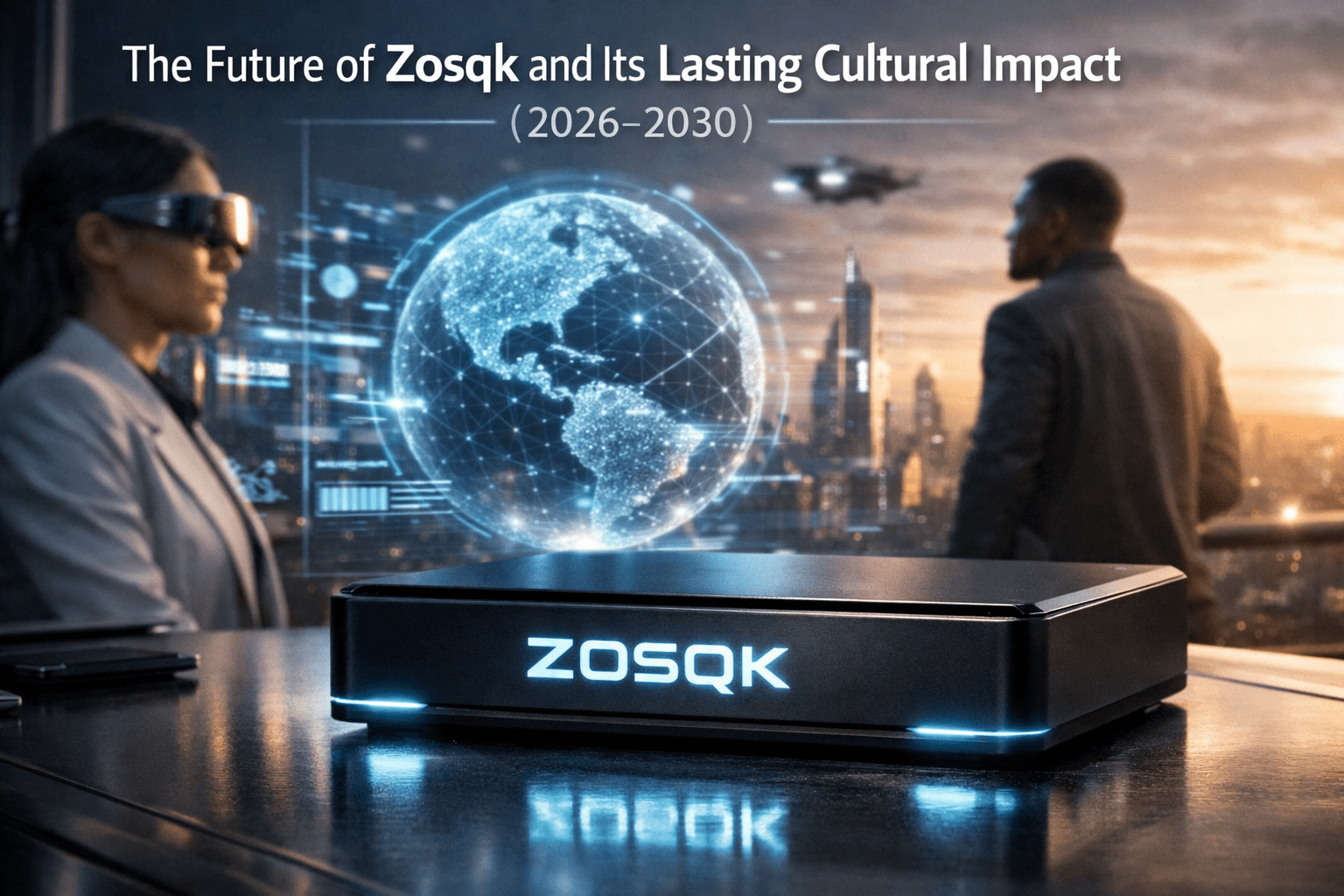
The Future of Zosqk and Its Lasting Cultural Impact (2026–2030)
Zosqk in the Next Digital Decade
As we move deeper into the 2026–2030 period, Zosqk is expected to become a touchstone of digital culture, recognized not for a single definition but for the ideas it evokes. Its future presence is likely to span multiple domains:
- Art and Design: More experimental installations, AI-generated artwork, and virtual reality projects will feature Zosqk as a conceptual anchor.
- Media and Entertainment: Films, music, and interactive storytelling will incorporate Zosqk as a symbol of digital futurism.
- Identity and Communication: It will continue as a cultural marker, particularly among communities seeking originality and cross-cultural expression.
Its adaptability ensures that Zosqk can evolve alongside changes in technology, audience preference, and global culture.
Zosqk as a Symbol of Global Creativity
Zosqk embodies the principle that creativity thrives in ambiguity. The term’s meaning is collectively authored, shaped by artists, musicians, designers, and everyday users.
South Korea’s tech-driven creative culture, combined with U.S. digital experimentation, positions Zosqk as a bridge between two worlds. It represents a global mindset where innovation is not defined by geography but by participation in a shared digital space.
By 2030, Zosqk may become a case study in transnational cultural phenomena—a word that illustrates how humans adapt language and symbols in response to a networked, algorithmic society.
The Role of Zosqk in Education and Research
Academia is beginning to recognize Zosqk as a microcosm of emergent digital language. Linguists, sociologists, and media theorists explore its significance to understand:
- How words develop meaning without centralized authority
- The role of online communities in shaping modern culture
- Cross-cultural transmission of abstract ideas in a networked world
In universities, workshops and lectures may reference Zosqk to illustrate 21st-century creativity, highlighting how students, creators, and researchers collaboratively generate cultural symbols.
Zosqk and Emerging Technologies
The next few years will see Zosqk intersect more prominently with emerging technologies:
- AI-generated art: Zosqk as a theme in generative visuals or virtual galleries
- Augmented reality (AR): Interactive experiences that embed Zosqk as a cultural or visual marker
- Metaverse and VR spaces: Digital environments adopting Zosqk as part of immersive storytelling
These technological integrations will continue to reinforce Zosqk as a living symbol, constantly evolving alongside the platforms where it exists.
Cultural Persistence and Adaptability
What makes Zosqk enduring is its capacity for reinterpretation. Unlike traditional cultural icons or commercial brands, it does not require rigid definition. Communities adapt it to their own aesthetic, artistic, and expressive needs.
This flexibility ensures that:
- It remains relevant across generational shifts
- It can survive changes in digital platforms or online trends
- It continues to foster participation rather than passive consumption
Zosqk is not just a trend; it is a framework for cultural engagement—an open-ended symbol for creativity, identity, and digital expression.
Lessons from Zosqk for Creative Communities
The rise of Zosqk offers several insights for anyone working in digital or creative industries:
- Ambiguity can fuel engagement: Words or symbols that allow multiple interpretations encourage community participation.
- Cross-cultural neutrality is powerful: Terms that travel easily across languages gain organic reach and recognition.
- Collaboration shapes meaning: Digital communities, not individuals or institutions, are often the true authors of modern cultural artifacts.
- Integration with technology multiplies relevance: Platforms, AI tools, and digital media amplify the visibility and adoption of cultural symbols.
By observing Zosqk, creators, educators, and cultural strategists can learn how to foster engagement in the digital age.
Zosqk in South Korean and U.S. Culture
In South Korea, Zosqk is associated with aesthetic experimentation, mood, and forward-thinking design. In the U.S., it resonates with digital futurism and experimental creativity.
Despite cultural differences, both audiences value:
- Novelty and originality
- Expressive freedom
- Community-based meaning-making
These shared values make Zosqk a unique case of parallel cultural adoption, where a single term thrives across continents while evolving differently in each context.
Zosqk and the Philosophy of Modern Language
Zosqk exemplifies a key principle of modern digital language: meaning is emergent and participatory. Unlike traditional words fixed in dictionaries, Zosqk grows organically, reflecting the needs, moods, and values of those who use it.
Philosophically, this challenges traditional notions of authorship, authority, and ownership. It demonstrates that in a connected, algorithm-driven society, words and symbols belong collectively, existing as much in the mind of the community as on any screen.
The Legacy of Zosqk
By 2030, Zosqk is likely to be remembered not as a single definition but as a conceptual landmark:
- A word that emerged from the digital ether
- A cross-cultural bridge connecting communities
- A symbol of creative collaboration and experimentation
- A living artifact of 21st-century communication
Its legacy lies in its ability to adapt, inspire, and connect, demonstrating the power of language to evolve with society.
Conclusion — Embracing the Mystery
Zosqk is more than a word; it is a phenomenon of the digital era. From its enigmatic origins to its adoption in art, music, fashion, and online identity, it illustrates the ways humans create meaning together in a networked world.
Its future is open-ended, just as its past and present are. By embracing Zosqks, creators and communities celebrate the possibilities of participatory culture, cross-cultural exchange, and digital innovation.
In the end, Zosqks reminds us that the most powerful ideas are those we shape collectively, where mystery, creativity, and connection converge.

 for South Korea & global audiences.)